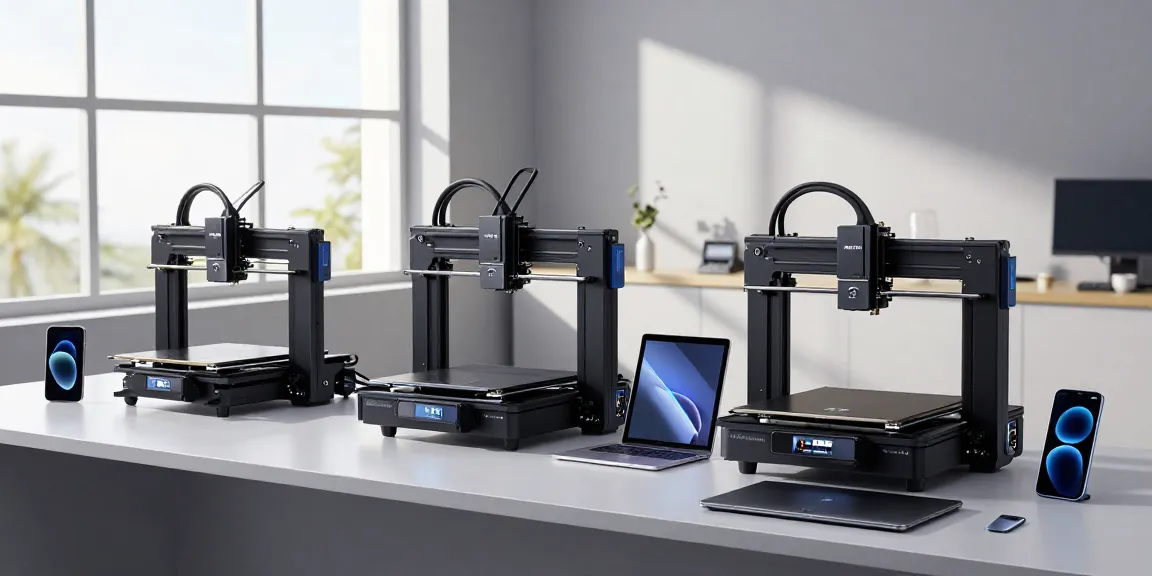
The Importance of 3D Printing in Modern Manufacturing
In today’s fast-paced world, 3D printing is fundamentally reshaping the landscape of manufacturing. This revolutionary technology has transcended traditional production methods by enabling unprecedented levels of creativity, efficiency, and customization. Its capabilities extend far beyond prototyping, influencing everything from aerospace and automotive to healthcare and consumer goods. As companies strive for competitive edges, the advantages of incorporating 3D printing into production processes become increasingly compelling. When exploring options, Best value 3D printer offerings are essential for those looking to advance their operational efficiencies while also ensuring affordability.
1. Revolutionizing Production Techniques
3D printing, also known as additive manufacturing, marks a paradigm shift away from traditional subtractive manufacturing methods. Instead of cutting away material, 3D printers build objects layer by layer from digital files, allowing for complex geometries that were once impossible or too costly to achieve. This ability to create intricate designs directly from CAD models fast-tracks product development and reduces the risk of material wastage. Additive manufacturing champions rapid prototyping, enabling firms to iterate quickly based on consumer feedback, dramatically shortening design and production cycles.
2. Cost-Efficiency and Time Savings
Three-dimensional printing considerably lowers the cost of production, particularly for short runs or custom pieces. Traditional methods often require expensive tooling and setups. 3D printing eliminates these overheads, allowing businesses to produce parts on-demand with significantly reduced lead times. In sectors like automotive and aerospace, where prototyping costs can be enormous, the switch to 3D printing translates into substantial time and cost savings, improving overall supply chain resilience.
3. Customization and Flexibility
The flexibility offered by 3D printers enables businesses to create tailored solutions fitting unique customer needs. This capability not only enriches product offerings but also fosters customer loyalty. Companies can quickly produce bespoke items without the constraints of mainstream manufacturing, catering to niche markets efficiently. Moreover, this encourages an innovative approach to product development, where businesses can test diverse concepts without significant risk.
Key Features of the K2 Plus/K2 Plus Combo 3D Printer
The Creality K2 Plus and K2 Plus Combo 3D Printers are engineered to meet the needs of both novice and experienced users, providing a blend of cutting-edge technology and ease of use. These attributes position the K2 Plus as a leading contender in the quest for the best value 3D printer.
1. Enhanced Printing Technology
Equipped with advanced printing technologies, the K2 Plus ensures highly precise prints. It utilizes an upgraded motherboard that enhances motion control algorithms, leading to accurate and smooth prints even at high speeds. Moreover, the dual-gear extrusion system contributes to its ability to handle a wide array of filaments, allowing users to experiment with different materials without compromising quality.
2. Versatile Filament Compatibility
The K2 Plus is compatible with an extensive range of filaments, including PLA, ABS, PETG, and even flexible materials like TPU. This versatility empowers users to choose the best material for their projects, whether durability, flexibility, or aesthetics are required. As the 3D printing landscape evolves, this adaptability positions the K2 Plus as a robust solution for diverse applications.
3. User-Friendly Interface and Setup
One of the standout features of the K2 Plus is its intuitive user interface. With a large touch screen and straightforward navigation menus, the printer simplifies the setup process, allowing beginners to start printing with minimal guidance. Additionally, its modular design facilitates easy assembly and maintenance, mitigating common frustrations found in 3D printing experiences.
Comparing the K2 Plus to Competitors
In evaluating the K2 Plus against its competitors, several critical factors come into play, including performance, cost-effectiveness, and user satisfaction.
1. Performance Benchmarks Against Market Leaders
When benchmarked against leading models from reputable brands, the K2 Plus consistently holds its ground. Its print quality rivals that of higher-priced competitors, demonstrating precision and reliability that satisfies both hobbyists and professional users alike. Tests show that the K2 Plus delivers smooth overhangs and fine detail, clearly establishing it as a competitive choice among 3D printers.
2. Cost Analysis for Small Businesses
The cost analysis for small businesses favoring the K2 Plus indicates a strong return on investment. Compared to alternatives, the pricing structure not only covers the printer itself but also provides software and filament package discounts that enhance overall savings. For businesses that require versatile printing capabilities without hefty overheads, the K2 Plus serves as an authoritative solution.
3. User Satisfaction Ratings and Reviews
User reviews of the K2 Plus emphasize reliability and ease of use as key factors influencing their choices. Positive feedback indicates that this printer has a reputation for consistency, with many users citing its performance over extended use. Community forums also report a high volume of shared tips and troubleshooting, contributing to an aggregated satisfaction that enhances the user experience.
Best Practices for Maximizing 3D Printing Output
To fully utilize the K2 Plus’s vast capabilities, several best practices can significantly enhance the quality and efficiency of 3D printing operations.
1. Material Selection and Management
Choosing the right filament for specific projects is crucial. Organizations should evaluate the mechanical properties, environmental resistance, and finish required for each application to ensure optimal results. Effective material management involves proper storage and handling of filaments to prevent moisture absorption, which can adversely affect print quality.
2. Calibration and Maintenance Tips
Regular calibration of the K2 Plus printer is necessary to maintain its performance and reliability. Users should frequently check the bed leveling, nozzle height, and extruder settings to prevent print failures. Routine maintenance, including cleaning and lubricating moving parts, helps prolong the lifespan and efficacy of the printer.
3. Leveraging Software for Optimization
Utilizing software tools that streamline 3D printing processes can lead to enhanced outputs. Employing slicing software with advanced settings allows for fine-tuning layer height, print speed, and infill patterns to optimize production times and material use. Users should also explore available firmware updates to unlock performance improvements provided by the manufacturer.
Future Trends in 3D Printing Technology
The trajectory of 3D printing is vast, with evolving trends that promise to reshape the technology landscape further.
1. Integration with AI and Machine Learning
The future of 3D printing is likely to see significant integration with artificial intelligence (AI) and machine learning capabilities. By utilizing data analytics, businesses can enhance predictive maintenance of 3D printers, allowing for improved uptime and reliability. Additionally, intelligent design software can suggest optimal design adjustments based on historical data, improving efficiency and product quality.
2. Sustainability and Eco-Friendly Practices
As environmental concerns gain prominence, sustainable practices within 3D printing are becoming paramount. Bio-based and recyclable materials are increasingly employed to reduce waste and energy consumption during the manufacturing process. The push for sustainable production techniques will compel manufacturers to explore eco-friendly filament options and operational approaches.
3. Advancements in Materials Science
Innovation in materials science is paving the way for new applications of 3D printing across sectors. Researchers are developing advanced filaments, such as composites that combine plastic with carbon fibers, enhancing strength while remaining lightweight. These advancements will enable 3D printing to serve innovative fields including aerospace, medical, and even construction.
FAQs
1. What is the best value 3D printer for beginners?
The K2 Plus offers an excellent introduction to 3D printing for beginners due to its user-friendly interface and versatility in handling various filaments. Its affordability makes it a compelling option for newcomers seeking to explore the world of additive manufacturing.
2. How does the K2 Plus compare to other models?
When compared to other models in its price range, the K2 Plus excels in print quality and ease of use. Its performance benchmarks against high-end machines indicate that while it may be more affordable, it does not compromise on essential features.
3. Can I use different materials with the K2 Plus?
Yes, the K2 Plus supports a broad spectrum of materials, including standard filaments like PLA and ABS, as well as flexible and composite materials. This functionality allows users to explore diverse projects ranging from prototyping to final production pieces.